
Technology Stack Selection: Evaluating Open-Source and Proprietary Tools for Scalable ML Development

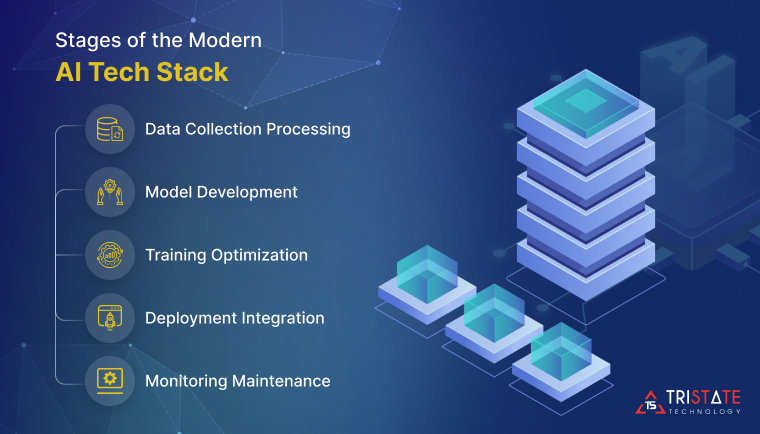
Selecting a technology stack for machine learning development feels less like shopping for software and more like assembling a ship for a long voyage. Each component becomes a plank, a sail, or a compass, and the sturdiness of the vessel depends on how well these parts fit together. The sea represents the unpredictable world of scale, where workloads swell, models evolve, and deployment winds shift. In this journey, leaders must choose carefully between open-source freedom and proprietary precision, ensuring that every tool helps the ship travel farther without losing stability.
When teams begin this voyage, they often discover that choosing the right stack shapes everything from experimentation velocity to operational resilience. It is also the moment where professionals consider structured learning paths such as a data scientist course, ensuring they understand how to navigate the vast toolbox available. Decisions made here determine whether ML initiatives glide smoothly or become heavy ships anchored by technical debt. For many organisations, especially those growing in India’s technology hubs, learning through a data science course in Mumbai gives them the map to interpret these tool ecosystems and make strategic selections.
The Art of Balancing Flexibility and Stability
Building an ML stack requires balancing creativity with reliability. Open-source tools offer a spirit of invention, like fresh timber that developers can shape as they desire. Platforms such as TensorFlow, PyTorch, MLflow, and Apache Spark let teams customise workflows, experiment rapidly, and enjoy vibrant community support. Their transparency becomes a magnifying glass that reveals every internal mechanism.
But freedom alone does not guarantee stability. Proprietary tools bring polished craftsmanship. Managed platforms like AWS SageMaker, Azure ML, and Google Vertex AI wrap infrastructure into seamless workflows. They reduce operational friction and protect teams from the storms of scaling. These tools provide governance, monitoring, and automated optimisation, which helps even non-experts deploy with confidence. Engineers who undergo a structured data scientist course often learn how to evaluate this trade-off through the lens of long-term maintainability.
Cost Dynamics and the Hidden Economics of Scaling
The true cost of a technology stack rarely shows up on an invoice. It emerges in the quiet corners of maintenance, upgrade cycles, integration issues, and staffing requirements. Open-source ecosystems lower upfront expense but raise long-term responsibility, requiring internal teams to maintain environments, compatibility, and security hygiene.
Proprietary platforms simplify these overheads by bundling them into subscription plans. Yet, as models grow and usage intensifies, licensing costs can balloon. Decision-makers must ask whether the platform’s automated scaling offsets these financial commitments. For teams in dense innovation corridors exploring a data science course in Mumbai, cost modelling becomes a foundational skill. They learn to look at total cost of ownership rather than immediate savings.
Interoperability and the Importance of a Modular Foundation
A scalable ML stack succeeds only when its components talk to each other effortlessly. Organisations must imagine their ecosystem as a network of connected rooms in an ever-expanding mansion. If the doors do not align, movement becomes slow and chaotic.
Open-source tools shine here because they rarely impose constraints on architecture. Data flows naturally between Jupyter, Airflow, Kubernetes, and various modelling libraries. Proprietary tools integrate best within their own ecosystems, offering beautifully streamlined hallways but fewer doors to external rooms. The key is modularity. Teams should design stacks that replace any tool without rebuilding the mansion.
Professionals often learn this modular mindset through training such as a data science course in Mumbai, where they study how interoperability keeps ML systems nimble and adaptable.
Security, Compliance, and Governance at Scale
When ML systems expand, they encounter deeper questions about data access, versioning, privacy, and auditability. Open-source tools give full visibility but also demand strict internal governance. Proprietary solutions bring rulebooks, automated compliance checks, and enterprise-grade permission models.
Security cannot be an afterthought in the stack selection process. This is where structured learning, such as a data scientist course, equips practitioners with the frameworks needed to evaluate vendors and toolchains. They gain the ability to map organisational risk against stack complexity to create a balanced, resilient environment.
Crafting a Roadmap for ML Stack Evolution
Choosing between open-source and proprietary tools is not a binary decision. Most scalable ML ecosystems blend both. The roadmap should start small, grow intentionally, and adopt tools that solve real operational bottlenecks instead of following trends. A wise team revisits its stack every quarter, adjusting components as models mature and data volumes shift.
In fast-moving tech landscapes, continuous learning becomes an anchor. Professionals familiar with the discipline through a data science course in Mumbai often bring clarity to these decisions, ensuring that every upgrade aligns with long-term scalability goals.
Conclusion
A technology stack for scalable ML development is a living organism. It grows, sheds layers, absorbs new capabilities, and adapts to changing business demands. The choice between open-source and proprietary tools is ultimately a question of vision, talent maturity, and operational discipline. Organisations that treat their ML infrastructure like a carefully engineered voyage set themselves up for smoother journeys across the shifting seas of innovation. With thoughtful planning and continuous learning, they build a stack that is not only powerful but future ready.
Business Name: Data Analytics Academy
Address: Landmark Tiwari Chai, Unit no. 902, 09th Floor, Ashok Premises, Old Nagardas Rd, Nicolas Wadi Rd, Mogra Village, Gundavali Gaothan, Andheri E, Mumbai, Maharashtra 400069, Phone: 095131 73654, Email: elevatedsda@gmail.com.


