
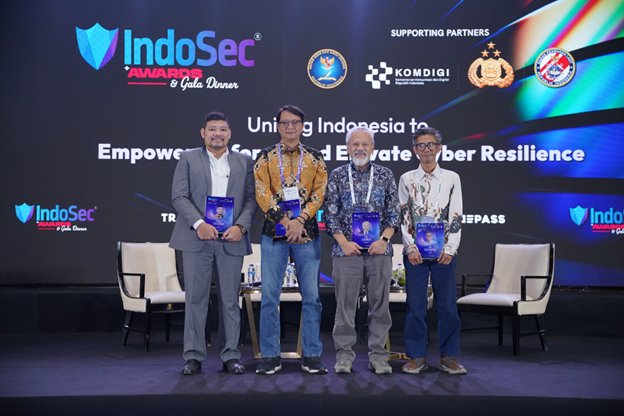
Cybersecurity Seminars and Strategic Intelligence Exchange in Indonesia’s Digital Security Ecosystem

Across Indonesia’s rapidly expanding digital infrastructure, security exposure rises in step with system growth. Financial platforms handle continuous transaction loads, public systems store large-scale citizen data, while enterprise environments operate across fragmented, often loosely connected architectures. Within this operational setting, cybersecurity seminars provide direct access to applied intelligence instead of surface-level discussion.
Not theoretical. Practical. In execution, these engagements focus on depth rather than coverage. Technical breakdowns, regulatory interpretation, alongside infrastructure-level risk analysis are brought into a single environment where decision-makers engage with real constraints. For organizations operating within Indonesia’s threat landscape, such forums support informed decisions without delay or guesswork.
Indonesia’s Cybersecurity Landscape and Strategic Imperatives
Across Indonesia’s digital economy, interconnectivity introduces layered exposure points. Fintech platforms integrate with legacy banking systems, e-commerce environments process user data continuously, while government services run across distributed networks that expand vulnerability surfaces.
At a regulatory level, frameworks are tightening. Within this setting, enterprises align security investments with compliance requirements, operational continuity, along with risk mitigation strategies tied directly to system scale. Data sovereignty rules, breach reporting obligations, plus infrastructure protection mandates now sit inside operational planning, not outside it.
National Cyber Policy and Regulatory Alignment
In the Indonesian system of governance, there is active regulation of cybersecurity that is actively defining enterprise activities. Organizational entities that deal with sensitive data have to be compliant with specific reporting procedures, whereas infrastructure operators are subject to higher compliance standards associated with national resilience.
Clarity matters here. Organizations are in contact with regulators through policy-oriented sessions, and through compliance experts that put enforcement mechanisms into practical terms. The timelines of implementation, reporting lines and audit expectations are addressed without any ambivalence so that the enterprises can easily align their internal systems with the external requirements.
Critical Infrastructure and Sector-Specific Risk Exposure
Across sectors, risk distribution is uneven yet interconnected. Banking systems operate under constant transactional pressure, telecom networks manage large-scale data transmission, while energy infrastructure supports essential services that cannot tolerate disruption.
A single breach can escalate quickly. From a technical perspective, discussions here focus on identifying sector-driven vulnerabilities. Financial institutions face transaction manipulation risks, telecom environments encounter interception threats, plus infrastructure systems deal with operational sabotage scenarios. Each domain requires targeted controls aligned with its threat profile rather than standardized defenses.
Financial Sector Security and Digital Transaction Risks
Within Indonesia’s financial ecosystem, digital transaction volume continues to increase without pause. Payment systems, mobile banking interfaces, along with fintech integrations create multi-layered transaction flows that introduce complexity.
Why do transaction systems remain high-value targets despite layered defenses? Attack surfaces evolve faster. In response, forums addressing financial security examine fraud patterns, authentication bypass techniques, plus anomaly detection models that operate in real time. Case-driven analysis enables institutions to refine detection capabilities, improve response precision, as well as reduce systemic exposure to transaction-based threats.
Cloud Transformation and Distributed Security Challenges
Across enterprise architectures, cloud adoption introduces both scalability and risk concentration. Applications are deployed across hybrid environments, identity systems operate across multiple layers, while visibility gaps emerge due to distributed configurations.
This shift changes everything. From an implementation standpoint, sessions addressing cloud security focus on embedding controls directly into architecture. Access governance models, workload protection strategies, along with monitoring systems are evaluated within operational contexts. Security is treated as an integrated function rather than a reactive layer applied after deployment.
Agenda-Driven Learning and Thematic Tracks
Within structured cybersecurity forums, agenda design defines the depth of engagement. Sessions are segmented into focused tracks aligned with real-world operational challenges across industries.
Precision matters here. Instead of broad narratives, each track targets specific domains such as infrastructure security, financial risk management, plus data governance frameworks. This segmentation allows participants to engage with content relevant to their functional responsibilities without dilution.
National Cyber Resilience Strategies
At a strategic level, these sessions examine coordinated security frameworks across public and private sectors. Discussions focus on long-term resilience planning, infrastructure protection models, as well as national-level threat response alignment.
Financial Ecosystem Protection
Focused on transactional environments, this track analyzes fraud vectors, monitoring systems, along with compliance requirements tied to financial operations operating at scale.
Cloud and Digital Infrastructure Security
These discussions address securing distributed systems. Identity controls, configuration risks, plus workload protection mechanisms are evaluated within cloud-native environments.
Data Protection and Privacy Governance
Centered on compliance, this track examines data handling frameworks. Organizations align internal processes with regulatory expectations through practical implementation models.
Threat Intelligence and Incident Response
Here, attention shifts to real attack scenarios. Detection strategies, response workflows, as well as containment techniques are analyzed using case-based insights.
Identity and Access Management Frameworks
Sessions explore authentication systems. Access control mechanisms, privilege management, along with identity verification models are examined in operational detail.
Security Operations Optimization
Operational efficiency becomes the focus. Automation strategies, monitoring systems, plus workflow refinement are discussed as measurable improvements.
Emerging Technologies and Risk Implications
New technologies expand exposure. AI systems, IoT networks, along with evolving digital tools introduce attack surfaces that require updated defense approaches.
Enterprise Collaboration and Decision-Maker Engagement
Across industries, cybersecurity decisions intersect at multiple levels. Financial institutions, technology providers, along with government entities face overlapping threat patterns that require coordinated understanding.
Direct interaction changes the equation.
Through structured discussions, stakeholders exchange operational insights tied to implementation challenges, resource allocation, as well as measurable outcomes. This interaction produces actionable intelligence that can be adapted across sectors without relying on theoretical assumptions.
Solution Benchmarking and Technology Evaluation
Within the cybersecurity market, solution diversity creates complexity in evaluation. Organizations must assess tools based on integration capability, operational alignment, along with scalability across existing infrastructure.
This requires direct exposure. Through live demonstrations, technical consultations, as well as implementation-focused discussions, enterprises evaluate technologies within realistic environments. This approach enables informed decision-making without dependence on surface-level comparisons.
Final Thoughts
What separates a high-impact cybersecurity gathering from a routine industry event operating on generic narratives? The distinction lies in relevance, execution depth, along with the ability to connect regional challenges with practical solutions. IndoSec Summit 2026 operates within this structure, delivering focused sessions, sector-specific intelligence, plus direct engagement with Indonesia’s cybersecurity leadership network.
For organizations assessing participation in a high-value conference in Indonesia, this platform offers structured access to actionable insights, aligned discussions, along with a clear connection to the region’s evolving security priorities.


