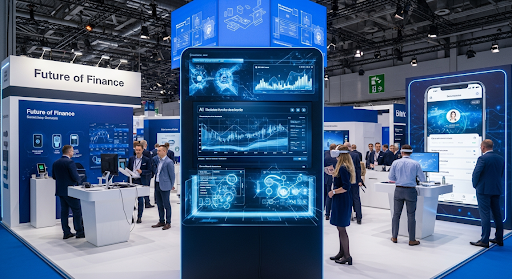

In the financial ecosystem, strategic decision-making is no longer shaped solely by balance sheets and regulatory updates. It is increasingly influenced by technology shifts, cybersecurity realities, digital customer expectations, and infrastructure modernization. Institutions that succeed are those that anticipate change rather than react to it. This is where insights from the biggest banking technology conference become strategically significant. Such forums do not merely showcase innovation; they reveal patterns, priorities, and practical implementation models that define the direction of the industry.
Modern strategy requires clarity on digital investments, operational resilience, data architecture, and compliance alignment. Senior leaders must interpret emerging technologies not as trends but as long-term enablers of competitiveness. Carefully analyzing knowledge shared at global platforms allows institutions to benchmark performance, evaluate technology maturity, and refine transformation roadmaps.
Strategic Foresight: Translating Innovation into Competitive Direction
Strategic foresight is not about pursuing innovation; it is a coordinated effort of incorporating tested knowledge into systematic and quantifiable transformation programs.
- Identifying Technology Inflection Points: The lessons learned through the banking technology conference can assist the leadership teams in identifying which technologies are no longer in the experimentation phase, but are being adopted by the rest of the organization. The knowledge of these inflection points helps banks to make investments at the appropriate time so that they do not invest too soon and they do not fall behind because of a lack of strategic focus.
- Aligning Technology with Business Objectives: Strategy should bring together innovation to revenue growth, efficiency in operations, and reduction in risks. The discussions at conferences can frequently be used to show that with the help of digital initiatives, measurable business results are directly supported, and the data can enable executives to connect the investments in technologies with the priorities of the board.
- Benchmarking Against Global Peers: Being exposed to case studies and journeys of transformation enables institutions to assess their digital maturity against the international perspective. This benchmarking helps to become more focused on strategic planning and pin down performance gaps needing more focused action.
- Anticipating Regulatory and Compliance Evolution: Often, new regulatory technologies are introduced in such forums. Such early awareness allows the banks to inculcate compliance flexibility into long-term strategic planning, so that regulation is not a burden but a reactive one.
Strengthening Digital Infrastructure for Scalable Growth
Long-term competitiveness is determined by digital infrastructure decisions. Clarity in strategy will mean that modernization investments will provide scalable growth and not individual advances.
- Modernizing Core Banking Systems: The discussion of infrastructure modernization presents the ways in which old systems might restrict agility. Leaders have clarity in the phased migration strategies, hybrid designs, and cloud adoption plans that reduce the impact and increase scalability.
- Improving Operational Resilience: Technology resilience models published in expert panels provide feasible models on how downtime can be reduced and continuity ensured in the case of disruption. The lessons help in building a strategy that is focused on reliability and customer trust.
- Optimizing Cost Efficiency Through Automation: The case studies on Automation indicate how smart workflow minimizes manual handling, minimizes operational risk, and enhances turnaround time. The insights can be converted into cost-optimization programs by strategic leaders according to the productivity targets.
- Enhancing Interoperability and Integration: Smooth intersystem integration is a strategic issue. Global institutions can teach the banks how to improve integration roadmaps and lessen technical fragmentation by learning about the implementation experience.
Cybersecurity as a Core Strategic Pillar
Business strategy cannot be separated from security strategy. The institutional credibility of a digital-first environment is defined by the inclusion of cybersecurity frameworks.
- Embedding Security into Enterprise Architecture: Cyber is becoming a central topic of conversation that puts importance on security-by-design concepts. Cybersecurity should be reflected in strategic planning on an architectural level and not as a secondary consideration.
- Adopting Proactive Threat Intelligence Models: Organisations are moving away from reactive security controls and are moving towards predictive threat detection. The knowledge of next-level monitoring systems and artificial intelligence-based analytics makes strategic investments in proactive defense systems.
- Balancing Innovation with Risk Governance: Due to the rise in digital channels, there is an increase in risk exposure. Knowledge on how best-in-class institutions strike a balance between agility and compliance can enable executives to come up with governance models that do not interfere with innovation at the expense of control.
- Strengthening Customer Trust Through Transparency: Good communication of cybersecurity practices will boost trust in people. Trust-building measures should be part of the strategy that shows that institutions are committed to the protection of financial information.
Data-Driven Decision Architecture
Strategic precision is based on data maturity. By perfecting analytics capabilities, institutions will be in a position to make informed and evidence-based growth.
- Leveraging Predictive Analytics for Strategic Planning: Advanced analytics will allow institutions to predict trends, credit risks, and personalize products. Learnings on the implementation models will inform strategic adoption of predictive models.
- Transforming Data into Actionable Intelligence: Raw data alone is not of much value until it is interpreted. Knowledge sharing platforms uncover systematic methods of developing centralized data ecosystems to increase decision accuracy and agility.
- Enhancing Customer Experience Through Personalization: With the help of analytics, banks can use the strategic application of analytics to customize their services according to the insights about the behavior of a client. This resonance enhances the retention and lifetime value of the customers.
- Supporting Executive-Level Decision Making: Real-time dashboard and integrated reporting systems enable the leadership to have instant and accurate performance information. Accountability and responsiveness are increased when such systems are incorporated into strategic frameworks.
Conclusion
Informed anticipation has created the modern financial strategy instead of reactive adjustment. Knowledge platforms globally can give insights into infrastructure modernization, cybersecurity resilience, data intelligence, and organizational transformation. By systematically learning the lessons of the banking technology conference and actively addressing emerging risks in cyber in banking, the institutions will be better placed strategically, create more confidence amongst stakeholders, and increase time-resilience in operations in an ever more complex digital landscape.
For deeper strategic insights and future-focused financial transformation guidance, explore the expertise offered by World Financial Innovation Series (WFIS) – Philippines. Discover how industry-driven intelligence can refine your strategic roadmap by attending the World Financial Innovation Series (WFIS) – Philippines and engaging with forward-thinking financial leaders.